Now, like most newsrooms in the country, we work around a "tapeless" and "paperless" system. News organizations can go live from almost anywhere. Our set is virtual.
My former boss has all sorts of gadgets, from E-bay and CD-R King. They are old, cheap, look funny sometimes but they are awesome! He used to say that technology won't be technology if you do not know how to make it work.
Right, media organizations need to make money to give them the latest and the best technology there is. It makes them more efficient and makes them look really good.
For example:
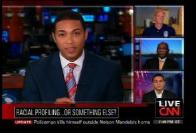 | |
| Photo 1: The split screen |
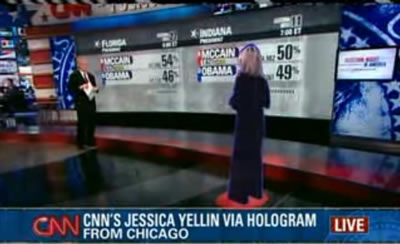 |
| Photo 2. The Hologram |
Photo one is the split screen. Four windows, four different locations, one screen.
Photo two is the hologram.
Both techologies are great. But the old-fashioned media person in me has a little problem. It's content vs technology.
Case in point: the election coverage in the Philippines.
Preparations for these kinds of coverage are insane. They take months, some even years. Agenda: outdo other networks in terms of being hi-tech. There is nothing wrong with that. Except that sometimes, knowingly or unknowingly, it ends there.
Satellite news gathering, 3G handsets, Skype, hologram. All of these are utilized at the same time. But the content of the coverage is predictable, if not utterly pointless.
Field reporters, armed with the latest news gathering gadgets, are deployed across the country. The studio is totally made up with giant plasma screens, virtual graphics, and recently, the hologram.
What reports do we get? A sample lineup would go: delivery of ballots and ballot boxes (or in the case of the 2010 polls, automated voting machines), opening of precincts, heightened security, long lines, voters looking for names (and of course, they couldn't find it), violations, counting.
Whoever gets the best video and airs it first, wins. Perspective? Sense? That could come later.
In fact, if your 3G handset could capture a hazy video of a "supposed" violation, you're good to go. (That's the secret of shows like Imbestigador, I guess. Surveillance videos need to look really wild and hazy and say "Tignan niyo mga Kapuso, o." And then we look until our eye balls pop out. Mission accomplished.)
But who cares when you have a hologram? Who cares when your graphics come out of thin air?
It's just sad when media sacrifice depth over looking good. In one of his tweets, @lordvoldemort7 (of the Harry Potter fame) wrote "Pretty doesn't hide stupid."
Sadly, sometimes it does.

Oh wow. I'm glad you wrote this, Icy. I had the exact same feeling while watching monitoring the last elections.
ReplyDeleteThis is a very interesting take on the whole shift of news programs to all these "cool" technology thingamjiggys. I guess what their capitalizing on is the perception that when high-technology is used, information is more accurate, photos/videos are more reliable, and news is always updated (because of the speed technology affords us). However, as you point out, this isn't really the case and it's all just smoke and mirrors for us. If audiences aren't as discerning, we might find ourselves in a state of never getting more substantial news programs. I think that this situation in news programs is no longer any different from the spectacle that entertainment shows offer. And that's kinda alarming.
ReplyDeleteI think networks do these upgrades because: 1. They want to show that they're up to par with the technological advances, 2. They want to constantly be ahead of their rival networks, and 3. They want to entertain/amaze the audience. We all know that what's pretty on the eyes would not hurt and could draw in more viewers, thus, higher ratings.
ReplyDeleteHA! I love @lordvoldemort7, most of his tweets are really RT/retweet-worthy. :)
ReplyDeleteI think you gave a really good example for this. I’d just like to highlight your statement sying, “Agenda: outdo other networks in terms of being hi-tech. There is nothing wrong with that. Except that sometimes, knowingly or unknowingly, it ends there.” I agree with you. It’s also probably one of my reasons for not watching TV news anymore, I’d rather read up on inquirer.net or philstar.com instead of seeing TV stations’ battle of follies.
One good case in point indeed is the coverage of the 2010 national elections. I also noticed that they only gave the usual facts, while print (and internet) news gave more in-depth analysis. If a viewer wants an in-depth analysis on TV, he or she would have to wait until sometime midnight for the programs that provide more analysis on election events. What an inconvenience, right?
In the midst of the so-called network wars, there indeed is another war that’s happening. And you’re right, it’s content versus technology.
I remember watching those holograms on CNN during the 2008 US Presidential Elections. For me, content should never be sacrificed for technology - but that doesn't mean they have to be at war with each other either. I think technology adds a novelty to the vehicles with which news is delivered, and when used properly it can supplement the news stories with their amplified sounds and imagery along with their ability to minimize the challenges of space and time. But the key there is that the technology must be used to augment the news rather than degrade its quality.
ReplyDelete