Monday, August 29, 2011
Ethics sucks?!
Having ethics sucks sometimes. Imagine all the juicy, controversial stories the world would have known if journalists can just get away with everything. This world would be so much different, I'm sure.
Different not better. That is the tricky part about ethics. Having a common ethical ground is necessary to maintain order. However, it sorts of puts everything on a weighing scale. And it's hard to weigh because rarely, if at all, does one really hit a balance.
And it's even harder now. Where does ethics stand in the era of social networks, surveillance cameras, hardball one on one interviews, and essentially, live TV? Don't we sometimes feel like "hey, you're not giving me the entire picture" and yet we know there is no way we are ever gonna get them?
The line between right and wrong in broadcasting is so thin. Often, it turns into that line between what's true and what's ethical. That line is always blurry and unsure.
But here's what I like about ethics in mass media. It gives the necessary reality check. Media organizations, however influential they seem to be, may not go beyond what is right and acceptable. That to me is important because the kind of media we have is far from perfect, or responsible at least. The media we know today is as dynamic as it could get. It is not afraid, it does not cringe, it keeps exploring, it breaks rules, but it is also careful, it tries hard to matter.
Off the record is a classic example that media people can't have it all. Just as soon as you get the "scoop," ethics comes knocking and tells you not to get too excited.
And just like that, the information that meant the world to you becomes useless.
But again, rules like these are necessary not only to maintain order but for everyone's protection -- protection from harmful information, protection from media men who are too full of themselves, protection from information we don't need, protection from getting too much of the good thing.

Friday, August 19, 2011
Trusting the audience
So that's how being a spokesman to someone feels like. Imagine having to defend someone else's position regardless of your own opposition.
For really stubborn people like me, that is pretty hard to take. "Asian audiences can resist Western influence," are you kidding me?
But just like everything else, it is a matter of getting used to. You stare at the proposition long enough, go through it over and over again until you get the hang of it.
I remember thinking of examples to prove our position. All Serena and I could come up with are points for the other team. Then we got a little creative. :)
Thank God, it's over. :)
Speaking of getting creative, that's what the local media must do. As it is, the form is second-rate, the content is predictable. I'm guessing this is one of the reasons why western media is such a hit. It trusts its audiences more.
The last movie I saw was "Babae sa Septic Tank." The Eastwood cinema was full packed, and with people who are obviously satisfied. Every now and then, there are movies or television shows that offer a breath of fresh air. This every now and then has just got to be more constant. Local audiences are gonna get used to them after a while.
Thursday, August 11, 2011
Does it help or does it hurt?
Over the phone:
Boss: What's your story?
Reporter: Wait sir, I'll google it.
True story.
Of course, this ended with the boss putting down the phone on the reporter, loud enough for everyone to ask "sino kausap niya?"
That's how awesome Google is. This journalist was at a two-hour presscon and still Google knows better.
If you or I were this reporter, it's probably time to give Google a break. This is a clear path to self-destruction.
Google, like other innovations, is bound to happen. If it were up to us, wouldn't we want Google to be the third half of our brain?
But that would be too much, isn't it? Scary, even.
I wrote about technology versus content in News productions for my last entry. (I was kind of hoping I reserved that for this week's blog, but anyway...hahaha!) It's so easy for technology to overshadow content. But that's not technology's problem. So bottomline, does it help or does it hurt?
As I am writing this, I am monitoring the UST vs DLSU match in the UAAP via Twitter. Talo ang UST, ouch! It was so close. No TV, no commentator, no warring pep squads, but I felt like I was at ringside.
This is what technology does to us, I think. It makes us feel like we're part of something amazing. It makes us feel important.
And to a certain extent, vain. That is according to a scientist at Oxford. According to Baroness Greenfield, social networking sites such as Facebook and Twitter have made this generation obsessed with themselves. Greenfield asks, "Why should someone be interested in what someone else has had for breakfast?"
The more vain part is users actually wait for several people to comment. In short, Greenfield is suggesting that over-exposure to these websites create mini-celebrities in us.
Pathetic, isn't it?
But the good thing is, we are in control. Technology can make robots fall in love but why should we fall for that? There is no stopping these innovations. They are just a matter of time and they are I believe, necessary. AS to how much of it we take in is up to us.
Technology is for the most part helpful. Makes life easier. It could only hurt if we let it.
Boss: What's your story?
Reporter: Wait sir, I'll google it.
True story.
Of course, this ended with the boss putting down the phone on the reporter, loud enough for everyone to ask "sino kausap niya?"
That's how awesome Google is. This journalist was at a two-hour presscon and still Google knows better.
If you or I were this reporter, it's probably time to give Google a break. This is a clear path to self-destruction.
Google, like other innovations, is bound to happen. If it were up to us, wouldn't we want Google to be the third half of our brain?
But that would be too much, isn't it? Scary, even.
I wrote about technology versus content in News productions for my last entry. (I was kind of hoping I reserved that for this week's blog, but anyway...hahaha!) It's so easy for technology to overshadow content. But that's not technology's problem. So bottomline, does it help or does it hurt?
As I am writing this, I am monitoring the UST vs DLSU match in the UAAP via Twitter. Talo ang UST, ouch! It was so close. No TV, no commentator, no warring pep squads, but I felt like I was at ringside.
This is what technology does to us, I think. It makes us feel like we're part of something amazing. It makes us feel important.
And to a certain extent, vain. That is according to a scientist at Oxford. According to Baroness Greenfield, social networking sites such as Facebook and Twitter have made this generation obsessed with themselves. Greenfield asks, "Why should someone be interested in what someone else has had for breakfast?"
The more vain part is users actually wait for several people to comment. In short, Greenfield is suggesting that over-exposure to these websites create mini-celebrities in us.
Pathetic, isn't it?
But the good thing is, we are in control. Technology can make robots fall in love but why should we fall for that? There is no stopping these innovations. They are just a matter of time and they are I believe, necessary. AS to how much of it we take in is up to us.
Technology is for the most part helpful. Makes life easier. It could only hurt if we let it.
Wednesday, July 20, 2011
Content versus technology
Technology is awesome. I remember how "bulok" our newsroom used to be. Our computers resembled that of the dot matrix era, our printer is super noisy, our graphic templates are blah, and our set is, well, blah.
Now, like most newsrooms in the country, we work around a "tapeless" and "paperless" system. News organizations can go live from almost anywhere. Our set is virtual.
My former boss has all sorts of gadgets, from E-bay and CD-R King. They are old, cheap, look funny sometimes but they are awesome! He used to say that technology won't be technology if you do not know how to make it work.
Right, media organizations need to make money to give them the latest and the best technology there is. It makes them more efficient and makes them look really good.
For example:
Photo one is the split screen. Four windows, four different locations, one screen.
Photo two is the hologram.
Both techologies are great. But the old-fashioned media person in me has a little problem. It's content vs technology.
Case in point: the election coverage in the Philippines.
Preparations for these kinds of coverage are insane. They take months, some even years. Agenda: outdo other networks in terms of being hi-tech. There is nothing wrong with that. Except that sometimes, knowingly or unknowingly, it ends there.
Satellite news gathering, 3G handsets, Skype, hologram. All of these are utilized at the same time. But the content of the coverage is predictable, if not utterly pointless.
Field reporters, armed with the latest news gathering gadgets, are deployed across the country. The studio is totally made up with giant plasma screens, virtual graphics, and recently, the hologram.
What reports do we get? A sample lineup would go: delivery of ballots and ballot boxes (or in the case of the 2010 polls, automated voting machines), opening of precincts, heightened security, long lines, voters looking for names (and of course, they couldn't find it), violations, counting.
Whoever gets the best video and airs it first, wins. Perspective? Sense? That could come later.
In fact, if your 3G handset could capture a hazy video of a "supposed" violation, you're good to go. (That's the secret of shows like Imbestigador, I guess. Surveillance videos need to look really wild and hazy and say "Tignan niyo mga Kapuso, o." And then we look until our eye balls pop out. Mission accomplished.)
But who cares when you have a hologram? Who cares when your graphics come out of thin air?
It's just sad when media sacrifice depth over looking good. In one of his tweets, @lordvoldemort7 (of the Harry Potter fame) wrote "Pretty doesn't hide stupid."
Sadly, sometimes it does.
Now, like most newsrooms in the country, we work around a "tapeless" and "paperless" system. News organizations can go live from almost anywhere. Our set is virtual.
My former boss has all sorts of gadgets, from E-bay and CD-R King. They are old, cheap, look funny sometimes but they are awesome! He used to say that technology won't be technology if you do not know how to make it work.
Right, media organizations need to make money to give them the latest and the best technology there is. It makes them more efficient and makes them look really good.
For example:
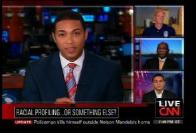 | |
| Photo 1: The split screen |
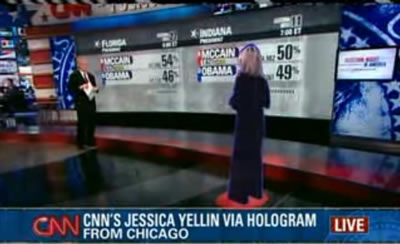 |
| Photo 2. The Hologram |
Photo one is the split screen. Four windows, four different locations, one screen.
Photo two is the hologram.
Both techologies are great. But the old-fashioned media person in me has a little problem. It's content vs technology.
Case in point: the election coverage in the Philippines.
Preparations for these kinds of coverage are insane. They take months, some even years. Agenda: outdo other networks in terms of being hi-tech. There is nothing wrong with that. Except that sometimes, knowingly or unknowingly, it ends there.
Satellite news gathering, 3G handsets, Skype, hologram. All of these are utilized at the same time. But the content of the coverage is predictable, if not utterly pointless.
Field reporters, armed with the latest news gathering gadgets, are deployed across the country. The studio is totally made up with giant plasma screens, virtual graphics, and recently, the hologram.
What reports do we get? A sample lineup would go: delivery of ballots and ballot boxes (or in the case of the 2010 polls, automated voting machines), opening of precincts, heightened security, long lines, voters looking for names (and of course, they couldn't find it), violations, counting.
Whoever gets the best video and airs it first, wins. Perspective? Sense? That could come later.
In fact, if your 3G handset could capture a hazy video of a "supposed" violation, you're good to go. (That's the secret of shows like Imbestigador, I guess. Surveillance videos need to look really wild and hazy and say "Tignan niyo mga Kapuso, o." And then we look until our eye balls pop out. Mission accomplished.)
But who cares when you have a hologram? Who cares when your graphics come out of thin air?
It's just sad when media sacrifice depth over looking good. In one of his tweets, @lordvoldemort7 (of the Harry Potter fame) wrote "Pretty doesn't hide stupid."
Sadly, sometimes it does.
Thursday, July 14, 2011
What do they really want?
It's a chicken and egg thing.
I wonder which changed which. The media landscape has changed greatly through the years and at a very rapid pace, I must say. The audience, too.
I wonder whether media is altering the way viewers think or viewers are forcing to change the way media works. Pardon my very personal case in point. The program which I am part of launched October last year. Since then, it has undergone at least three minor re-formats. I would always protest in silence, "what the hell do they want?"
Take the evolution of the Pinoy "teleserye," for example. Before we know it, it has evolved into a sine-novela, drama-serye, fanta-serye, etc. And who would have thought that you can play around with the presentation of News in a lot of ways. Say what you want about TMZ but reputable news organizations are taking cue from its "interesting" manner of news gathering.
The fragmentation they say is a result of technology. This technology encourages people to narrow their consumption of media so that their specific interests are targeted. Online news sites for example are becoming increasingly popular and increasingly a threat to mainstream news organizations. The audience is now more specific and selective.
There are a couple of disadvantages to that of course. For one, there is a greater chance that other important things are missed and taken for granted, but there is also comfort in knowing that at least the audiences now know what they want.
As the audience becomes fragmented, so does media. And there is wisdom and beauty in this.
In many ways, fragmentation is bringing about varied presentations and perspectives. Because of this, fresh techniques in positioning and marketing are also discovered.
This should be good for media industries in the long run. Though this increases cost, it also widens options and provides more opportunities. There is no single source of everything now. There is no single or right way of presentation.
Fortunately, there are different ways of figuring out what the audiences want. We now have ratings and similar studies, FGD's, social media, etc. Media industries are now aware that they cannot stand still, they cannot be complacent, and they have got to listen.
Which changed which? It doesn't matter, I guess. Change has been good and necessary anyway. It is this change that makes the media relevant and the choices of the audience important.
I wonder which changed which. The media landscape has changed greatly through the years and at a very rapid pace, I must say. The audience, too.
I wonder whether media is altering the way viewers think or viewers are forcing to change the way media works. Pardon my very personal case in point. The program which I am part of launched October last year. Since then, it has undergone at least three minor re-formats. I would always protest in silence, "what the hell do they want?"
Take the evolution of the Pinoy "teleserye," for example. Before we know it, it has evolved into a sine-novela, drama-serye, fanta-serye, etc. And who would have thought that you can play around with the presentation of News in a lot of ways. Say what you want about TMZ but reputable news organizations are taking cue from its "interesting" manner of news gathering.
The fragmentation they say is a result of technology. This technology encourages people to narrow their consumption of media so that their specific interests are targeted. Online news sites for example are becoming increasingly popular and increasingly a threat to mainstream news organizations. The audience is now more specific and selective.
There are a couple of disadvantages to that of course. For one, there is a greater chance that other important things are missed and taken for granted, but there is also comfort in knowing that at least the audiences now know what they want.
As the audience becomes fragmented, so does media. And there is wisdom and beauty in this.
In many ways, fragmentation is bringing about varied presentations and perspectives. Because of this, fresh techniques in positioning and marketing are also discovered.
This should be good for media industries in the long run. Though this increases cost, it also widens options and provides more opportunities. There is no single source of everything now. There is no single or right way of presentation.
Fortunately, there are different ways of figuring out what the audiences want. We now have ratings and similar studies, FGD's, social media, etc. Media industries are now aware that they cannot stand still, they cannot be complacent, and they have got to listen.
Which changed which? It doesn't matter, I guess. Change has been good and necessary anyway. It is this change that makes the media relevant and the choices of the audience important.
Thursday, July 7, 2011
Power and responsibilty
My childhood hero was Madonna. She used to have this unspeakable power over me. That power made me dress up like her, sing like her and wear make-up like her.
That power wore off as I got older. But we gotta admit, the woman's still got it. She has evolved along with the little girls that adored her. She's 52 now and still relevant. She has remained important.
Madonna is my metaphor for media. Much like Krippendorff's "control." Like media, Madonna creates a social stimulus. She has made her way into the culture of music fans that are more or less unsuspecting. She impacts them greatly and influences them like religion would.
Media can do and be a lot to a lot of people. But ultimately, like artists, media seeks to influence. Any product or text it produces would be nothing if it does not mean anything to anyone.
A lot of social surveys and researches carry the "media" factor. For example, kids think the way they do because of media. Such is the perception towards government because of media. People have a better/worse view of the world because of, well, you know the drill, media.
And they are probably right. Media has become a way of life. Our values and our decisions are greatly influenced by media.
Take the Vizconde case for example. In our heads, we were deciding who was the victim. Newspapers flash a photo of the crime scene along with a photo of Hubert Webb. And then there is an inset of poor Mang Lauro. Didn't media's portrayal make us persecute Hubert in our minds at one point?
President Aquino's Porsche. His love life. His smoking habit.
Media made us care more than we should. Those are legitimate stories, I believe, but maybe these were taken too far. Because at the end of the day, the President buying a sports car, and later on selling it, did not change the world.
And remember Ondoy? Didn't we all suddenly feel like we can do something?
Media is powerful like that. And you know what Spiderman said about power, right?
If media were to influence society the way it does, it must at least be conscious of giving enough, right information. Like Krippendorff said, media is a "container" filled with information and content. These metaphors, container and control, must strike a balance.
For people to decide fairly, for people to be influenced positively, the media must release information responsibly.
The responsibility of media to be truthful and fair is as great as its power to impact decisions and lives in general.
That power wore off as I got older. But we gotta admit, the woman's still got it. She has evolved along with the little girls that adored her. She's 52 now and still relevant. She has remained important.
Madonna is my metaphor for media. Much like Krippendorff's "control." Like media, Madonna creates a social stimulus. She has made her way into the culture of music fans that are more or less unsuspecting. She impacts them greatly and influences them like religion would.
Media can do and be a lot to a lot of people. But ultimately, like artists, media seeks to influence. Any product or text it produces would be nothing if it does not mean anything to anyone.
A lot of social surveys and researches carry the "media" factor. For example, kids think the way they do because of media. Such is the perception towards government because of media. People have a better/worse view of the world because of, well, you know the drill, media.
And they are probably right. Media has become a way of life. Our values and our decisions are greatly influenced by media.
Take the Vizconde case for example. In our heads, we were deciding who was the victim. Newspapers flash a photo of the crime scene along with a photo of Hubert Webb. And then there is an inset of poor Mang Lauro. Didn't media's portrayal make us persecute Hubert in our minds at one point?
President Aquino's Porsche. His love life. His smoking habit.
Media made us care more than we should. Those are legitimate stories, I believe, but maybe these were taken too far. Because at the end of the day, the President buying a sports car, and later on selling it, did not change the world.
And remember Ondoy? Didn't we all suddenly feel like we can do something?
Media is powerful like that. And you know what Spiderman said about power, right?
If media were to influence society the way it does, it must at least be conscious of giving enough, right information. Like Krippendorff said, media is a "container" filled with information and content. These metaphors, container and control, must strike a balance.
For people to decide fairly, for people to be influenced positively, the media must release information responsibly.
The responsibility of media to be truthful and fair is as great as its power to impact decisions and lives in general.
Saturday, July 2, 2011
Communication as Culture
I swear I will not make things up. But this is as far as I can go. Piece of advice, when you know the readings are a bit technical, make sure you make it to class. :-)
So, James W. Carey identified two views of communication: the transmission view and the ritual view. The way I understand it, transmission view is the simpler, more linear, maybe more common view. It's basically the traditional Sender-Message-Channel-Receiver approach. More like a one-way text message, perhaps.
The ritual view is more interesting. Communication here is defined by shared beliefs or as something that brings people together. There is participation and fellowship and common faith. This view, I think, gives communication more justice. Because ultimately, communication is and should be more than transporting and imparting messages and information.
Take public speakers, for example. Or politicians during campaign. They always speak in the locals' tongue, even just to say good evening, or say "ang lola ko laki dito (kahit hindi)." The result, an applause from the "kinikilig" voters. No matter how tacky, it works. It's like you are sharing something in common and possess the same frames of reference.
Another example I can think of are the TV Networks' taglines: Kapuso, Kapamilya, Kapatid, Kabarkada. Surely, these networks want to communicate that they are one with the Filipino family, that they feel them, that they won't ever leave them. See how that single word can create a loyal following. It's amazing how one word can make people feel that they are a part of something.
And recently, I had a problem with "double meaning." Never did I think I would be summoned by the MTRCB. The program, which I produce for, has a love advice segment. The letter sender was writing to ask for tips on how women could be attracted to him. The hosts used a double-meaning acronym, and went on forever. MTRCB received complaints because as Grace Poe reasons, the problem with double meaning is that receivers (viewers, in this case) almost always tend to have only one interpretation. (Just like pun. They're always intended.)
The culture of "bastos" is common. Especially in the mass media. And people will always relate to it. It can bring people together or break them apart. But it will always be shared.
See you all on Tuesday!
So, James W. Carey identified two views of communication: the transmission view and the ritual view. The way I understand it, transmission view is the simpler, more linear, maybe more common view. It's basically the traditional Sender-Message-Channel-Receiver approach. More like a one-way text message, perhaps.
The ritual view is more interesting. Communication here is defined by shared beliefs or as something that brings people together. There is participation and fellowship and common faith. This view, I think, gives communication more justice. Because ultimately, communication is and should be more than transporting and imparting messages and information.
Take public speakers, for example. Or politicians during campaign. They always speak in the locals' tongue, even just to say good evening, or say "ang lola ko laki dito (kahit hindi)." The result, an applause from the "kinikilig" voters. No matter how tacky, it works. It's like you are sharing something in common and possess the same frames of reference.
Another example I can think of are the TV Networks' taglines: Kapuso, Kapamilya, Kapatid, Kabarkada. Surely, these networks want to communicate that they are one with the Filipino family, that they feel them, that they won't ever leave them. See how that single word can create a loyal following. It's amazing how one word can make people feel that they are a part of something.
And recently, I had a problem with "double meaning." Never did I think I would be summoned by the MTRCB. The program, which I produce for, has a love advice segment. The letter sender was writing to ask for tips on how women could be attracted to him. The hosts used a double-meaning acronym, and went on forever. MTRCB received complaints because as Grace Poe reasons, the problem with double meaning is that receivers (viewers, in this case) almost always tend to have only one interpretation. (Just like pun. They're always intended.)
The culture of "bastos" is common. Especially in the mass media. And people will always relate to it. It can bring people together or break them apart. But it will always be shared.
See you all on Tuesday!
Subscribe to:
Posts (Atom)